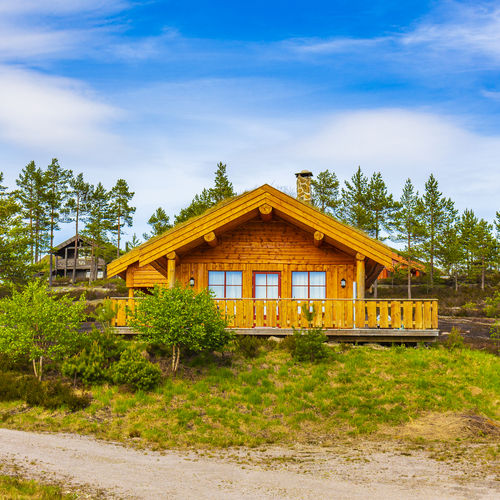
If you’ve read my previous columns or spent any time with me, then you know I almost always oppose new government regulations. However, given the devastation wildfires have caused here and in other communities in recent years, I think it's wise for all of us to harden our homes against wildfire. As such, I’m working to comply with the Zone Zero defensible space standards that are in the process of being finalized.
According to the California Board of Forestry, “the proposed regulations would require property owners in State Responsibility Areas and Very High Fire Hazard Severity Zones in Local Responsibility Areas to greatly reduce combustible materials within the first five feet of homes and other structures.”
In Lake, Mendocino, Napa and Sonoma Counties alone, there are almost 1.8 million acres designated “Very High Fire Hazard Severity,” which represents about 10% of all Very High Fire acreage in California. So, we are the target audience. If you’d like to see if your particular property is in this zone, you can look it up here: https://osfm.fire.ca.gov/what-we-do/community-wildfire-preparedness-and-mitigation/fire-hazard-severity-zones.
The proposed regulations require property owners to reduce or eliminate vegetation and other combustible material within five feet of structures, with practically nothing allowed under the eaves. Any new construction will have to comply with all the new regulations right away, but the rest of us will be able to ease into it, with some requirements taking effect right away and others being phased in over three to five years. Exact dates haven’t been published because while the Public Resources Code Section 4291 and Executive Order No. N 18 25 are in effect, the regulations detailing how to put it all into practice haven’t been finalized.
Before I go on, I'd like to remind everyone that we have a local Mendocino County Fire Safe Council that provides excellent information and other resources, so if you need help clearing your property or want to know how to stay informed about wildfires, visit firesafemendocino.org.
Okay, here’s what we know about the new regulations, so we might as well start preparing.
Immediately, we’ll all need to keep roofs and gutters clear of leaves and combustible debris. We'll also need to clear any dead or dying tree branches and keep live tree branches at least 10 feet from any chimneys or stovepipes. Finally, we'll need to trim any live tree branches away from under the eaves. We should be doing all this anyway.
Within a few years, you’ll need to manage two subzones in the five feet immediately around your house. The safety subzone is from the house to the eave’s edge going out at least one foot. This is the most restrictive area. The low-combustibility subzone is from the edge of the eave to the remainder of the five feet, just outside the safety subzone. There should be nothing flammable under the eaves. And, regardless of how big your eaves are, you’ll have to maintain a vegetation-free zone within two feet of windows, doors, and vents, and within five feet of attached decks, stairs, and pergolas.
Not everything has to be removed within five feet of your house. It doesn’t have to look like a nuclear blast site. Existing trees can stay if you take care of them. That means no dead wood, branches trimmed up off the ground so there’s no ladder fuel, and roof/chimney clearance. The regulation states that the bottom six feet of trees (or lower one-third, whichever is less) must be trimmed, but I think ten feet is better. You can also have lawn or ground cover and some potted plants or in-ground plants as long as they are no taller than 18 inches and widely spaced apart.
If you have a fence that attaches directly to your house, it’s safer if it’s metal—not only for fire but for pests. Wood-to-wood contact is a great way to invite termites and other critters into your home. For defensible-space purposes, new combustible fencing is restricted where it attaches to (or is near) the structure, but from what I’m reading, it looks like existing combustible fencing may still be repaired with the existing type of material.
Be aware that a neighbor's accessory dwelling unit (ADU) or garage coming within five feet of your property line does not create additional obligations for you. However, if you’re a landlord, be sure your tenants are complying with these regulations because ultimately, you are responsible for your property’s condition.
In addition to state regulations, local jurisdictions may adopt their own protocols and exemptions, so if you have property-specific questions, you should call the Ukiah Valley Fire Authority. Even if local and state officials aren't patrolling neighborhoods for compliance, you can be sure that insurance companies will be.
If you have questions about property management or real estate, please contact me at [email protected] or call (707) 462-4000. If you have an idea for a future column, share it with me and if I use it, I’ll send you a $25 gift certificate to Schat’s Bakery.
Dick Selzer is a real estate broker who has been in the business for more than 50 years. The opinions expressed here are his and do not necessarily represent his affiliated organizations.
Check out this article next