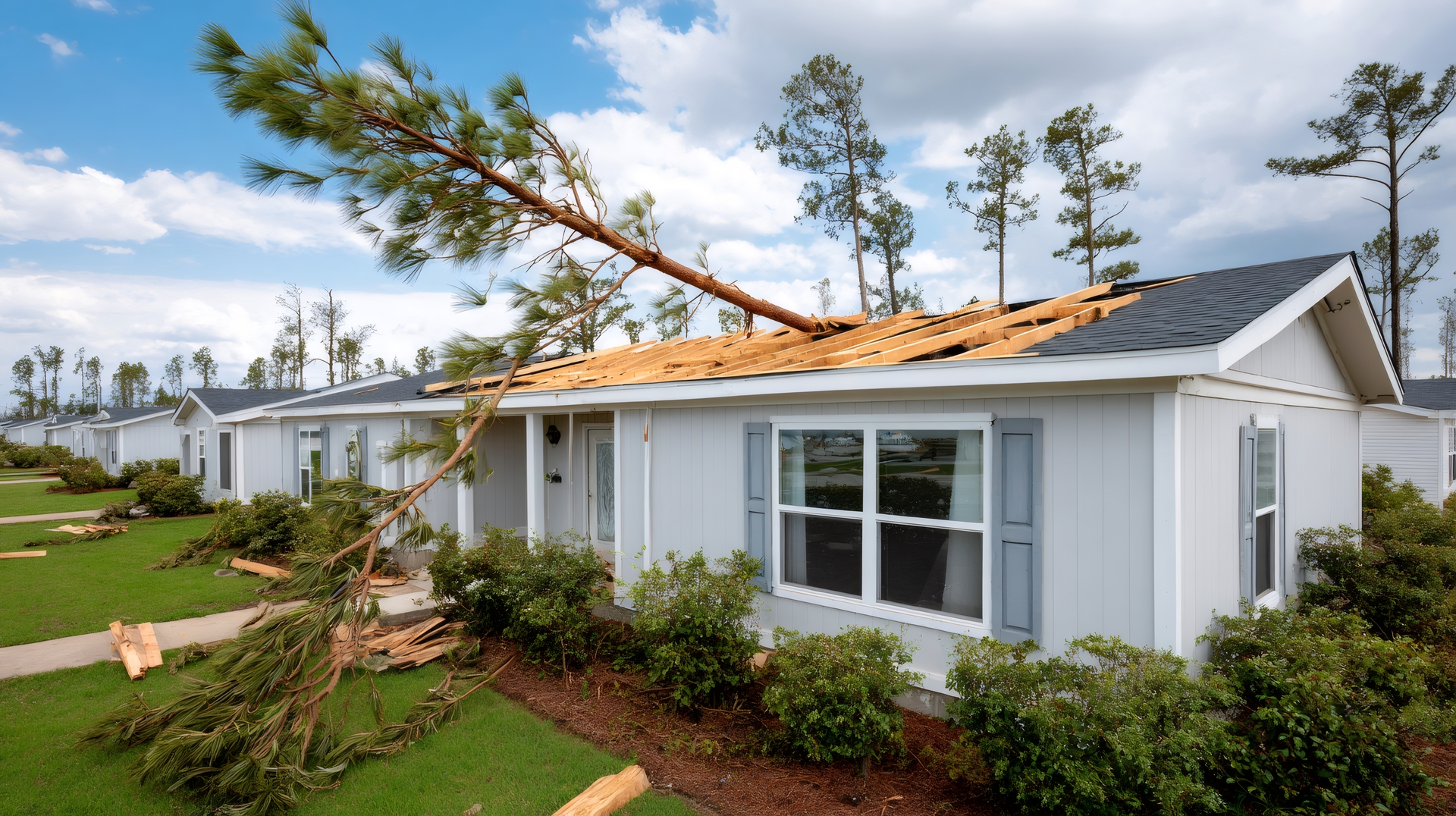
Insurance policies often let you know that “acts of God” are not covered, so the
question becomes: Who is responsible for fixing damage that’s nobody’s fault? Last
week, I reviewed common questions that come up when a property is in escrow and
disaster strikes. This week, I’ll review who is financially responsible for accidents or acts
of God when dealing with rental property.
Before I share answers to common questions, please remember that I am a real
estate broker, not a lawyer, so this is intended as food for thought—not legal advice. If
you are in the unfortunate position of arguing over who pays for destruction caused by
“irresistible superhuman causes” or “force majeur” (other terms used to describe acts of
God), talk to your lawyer forthwith
.
What are the tax effects of destruction of a property?
While insurance companies won’t cover acts of God, the federal government will
help you out. Federal tax code does allow for the deduction of "casualty losses,"
including destruction or loss of property caused by natural disasters and other bits of
bad luck.
For business property, the casualty loss is fully deductible. For non-business
property (of individuals), losses from events like floods, earthquake, fire, storm, or other
natural occurrences, are generally deductible only when the loss exceeds 10 percent of
the taxpayer's adjusted gross income for the year of loss. (And you can only claim this if
you itemize your deductions.)
Fun fact: If the loss results from a disaster that the President determines to be
eligible for federal assistance, you can deduct the disaster losses on your return either
for the year in which the loss occurred or for the preceding tax year.
Yes. Under California Civil Code, the lease agreement is terminated
automatically if the entire premises are destroyed, unless the parties have agreed to
something different. If the residence is only partially destroyed, the damage needs to be
meet the legal definition of “material” damage, meaning whatever was damaged was important enough that it influenced the tenant’s decision to lease the property in the first place. If there’s material damage, the tenant can terminate the lease by notice to the landlord.
Sometimes, determining what qualifies as “material” is obvious. Sometimes, it
requires a court case and a judge. If a powerful storm knocks an oak tree into your front
door, ripping it off its hinges, that’s material damage. If a powerful storm causes flooding
that comes under the front door and stains a little carpet in the entryway, that probably
isn’t material.
Can a landlord collect further rent after the lease or rental agreement is
terminated due to destruction of the premises?
No. The obligation to pay future rent ends when the rental agreement is
terminated. However, a tenant may still owe back rent.
When figuring out who is responsible for what, start by reviewing your lease
agreement. If there’s a dispute, your lease may outline what type of dispute resolution
(arbitration, mediation, or litigation) is required.
If you have questions about property management or real estate, please contact
me at [email protected] or call (707) 462-4000. If you have an idea for a future
column, share it with me and if I use it, I’ll send you a $25 gift certificate to Schat’s
Bakery.
Dick Selzer is a real estate broker who has been in the business for more than
50 years. The opinions expressed here are his and do not necessarily represent his
affiliated organizations.
Check out this article next